
- All Posts
- Students Lead the Charge on Campus Energy Efficiency at WWU
Students Lead the Charge on Campus Energy Efficiency at WWU

McKinstry intern Bre Mennenoh’s interest in energy was sparked by her childhood in Colorado, where she experienced the effects of unsustainable energy extraction firsthand.
“Growing up, my neighborhood was negatively affected by fracking,” Bre said. “My experience living through that, as well as the environmental awareness held by many people of my generation, made me realize there are so many other ways we can power the built environment without bringing harm to people and the planet. I knew that was something I wanted to pursue as a career and had the potential to make a big difference.”
As she was researching college options, she discovered the Institute for Energy Studies (IES) at Western Washington University (WWU), which trains the next generation of innovators to tackle the transition to sustainable energy. IES provides an interdisciplinary program that gives students technical and analytical expertise and pairs it with hands-on experience in the field.
“It’s not a traditional curriculum,” Bre explained. “We have some courses that are more classroom based and cover topics like thermodynamics, but for the most part, we’re getting out in the field and visiting different buildings to get a close look at their systems. The work is challenging, but it’s so rewarding.”
Students learn alongside McKinstry experts
Adding to the rewards of the program is the opportunity for hands-on learning alongside industry professionals at McKinstry to deliver real-world experience to students.
This connection was made thanks to McKinstry’s support of WWU as their trusted partner. McKinstry is conducting ASHRAE level 2 audits on 14 of WWU’s buildings to help the university fulfill energy efficiency goals as part of their Sustainability Action Plan. This work, funded by a grant through Washington’s Energy Audit Incentive for Public Buildings Program, will not only help WWU save money and work toward their plan but also help the university on its path to Clean Building Performance Standard compliance.
While this work could have been conducted as a normal audit, McKinstry and WWU saw a great opportunity to bring students into the work as a real, hands-on educational experience.
“One of my goals since joining McKinstry has been to get students involved in as many on-campus projects as possible,” said Kelsey Carlson, senior account executive, Technical Services, who was on the proposal team for this project. “It just so happened that the IES had an energy auditing class while we were scheduled to do the work, so it all lined up perfectly.”
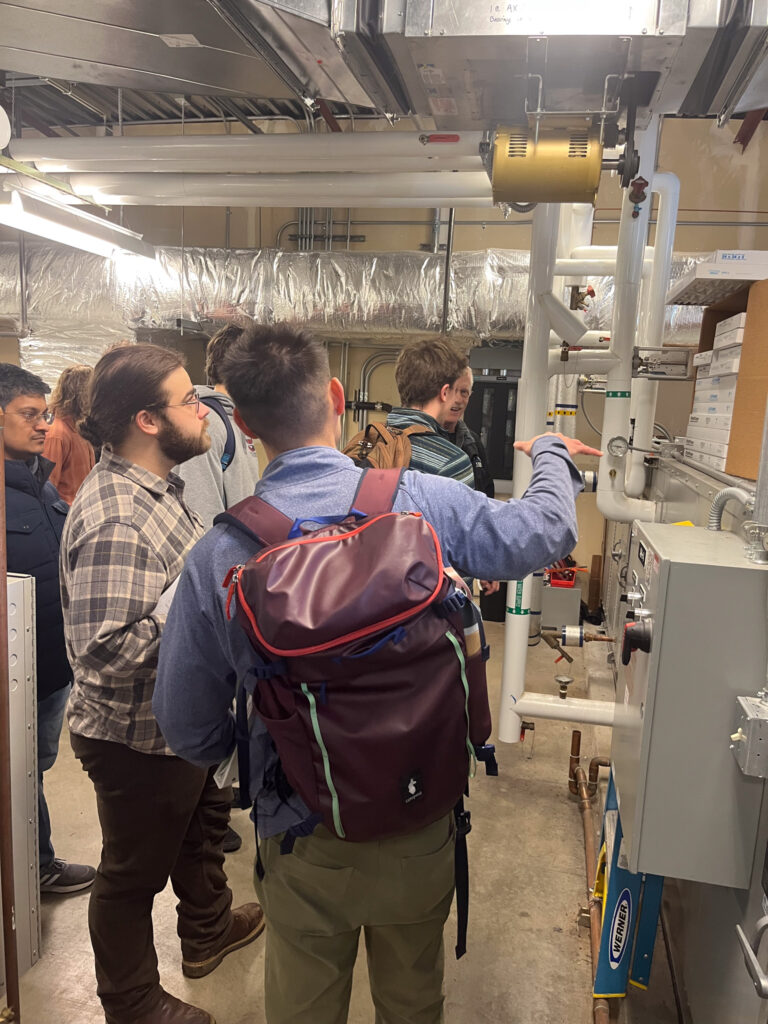
Bre and her classmates in IES’ auditing class put their knowledge to the test and measured different components of their assigned buildings to determine the best opportunities for energy savings. Meanwhile, McKinstry Technical Services and Engineering teammates completed an audit of their own, students and professionals taking measurements and jotting down their findings in tandem. As part of their final project, students presented their findings to instructors and the McKinstry team, providing their own suggestions on ways each building could be made more efficient.
“I really underestimated how intense auditing would be,” Bre said. “It involved a lot of math from scratch, formatting spreadsheets, and polishing reports. We got to follow the McKinstry team and take measurements alongside them, but we weren’t allowed to ask any questions because our instructors wanted us to use our own knowledge. But I was still able to get to know people on the McKinstry team, and it was beneficial to shadow them and see what it’s like to perform a real-life audit. It was stressful, but it was also one of the most rewarding experiences I’ve had in my education.”
After audits from McKinstry and the student collaborators were analyzed, the McKinstry team presented their final energy saving recommendations to WWU. McKinstry is partnering with them to make these suggestions a reality. This work includes retro-commissioning of existing HVAC systems, replacing the existing steam-to- hot water heat exchanger with high-efficiency electric heat pump water heaters, and more.
From student collaborator to McKinstry intern
Given her stellar performance in class and her extracurricular involvement on campus, Bre was referred by her professors to McKinstry’s B.L.U.E. Internship Program. Through her internship, Bre is bringing the expertise gained through her hands-on classroom experience to the Western Washington Technical Services team.
“Getting that hands-on experience in my audit class has made the transition from student to intern so much easier,” Bre said. “Being in the environmental space, I’ve known about McKinstry for some time now, and being able to join as an intern and work with the team has been surreal. Everyone here has been so welcoming.”
The work she conducted as a student collaborator lives on in the final report delivered to WWU and the work McKinstry is partnering with them to deliver as a result of the audits.
“I was in a meeting a few weeks ago where someone pulled up the report I did on Miller Hall when I was a student,” Bre said. “It has been so surreal to see my work being recognized, acknowledged, and put into action. At the time, I thought of it as just a school project. But the fact that we’re actually using it to make the building more efficient? That has been a dream come true.”
Paving the way for academic-industry collaboration
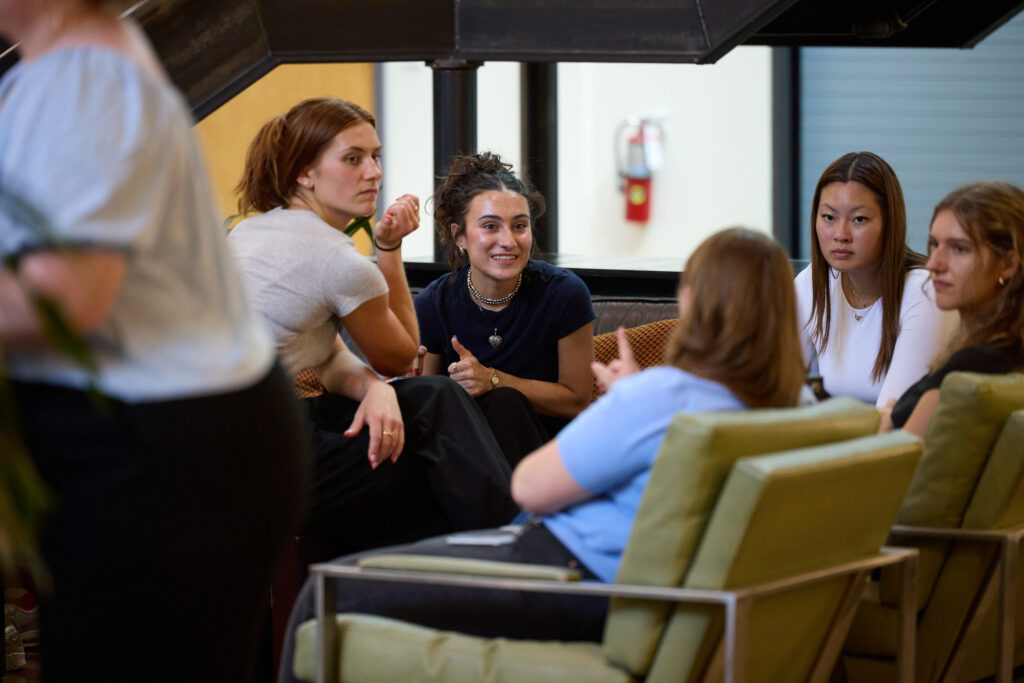
“My goal is to expand this type of work to as many schools as we can. We have a whole generation of students who are excited and passionate about innovating the built environment, and opportunities like this allow them to come straight out of college with real hands-on experience,” Kelsey said.
Kelsey, Bre, and John Kearns, associate engineer, building performance, will join Jeff Aslan, WWU assistant director of campus utilities and sustainability, at the PCAPPA Conference this October to discuss and reflect on this collaborative model between WWU, IES, and McKinstry.
“This is a great opportunity to position McKinstry as an industry leader in integrating academic learning with real-world applications,” Kelsey said. “We’re providing a replicable model for academic-industry collaboration that allows universities and our industry to co-create a skilled and motivated future workforce ready to lead in the green economy.”
Explore Other Insights

Kyra Hughes: Building Better Solutions Through A Broader …
The best facility service solutions rarely come from a single perspective. They come from understanding how engineeri…

Lauren Frugé: Leading with Values and Purpose
Lauren Frugé spent her career turning a lifelong passion for environmental stewardship into action. Today, as regiona…

From Heatwaves to Haboobs: Planning for Weather Risks
Effective weather planning not only protects workers, but also supports project continuity by helping teams anticipat…

