
- All Posts
- A New Epoch of Action
A New Epoch of Action
Earth Month is a time to celebrate environmental protection, awareness and action. Each April, McKinstry reflects on the built environment’s recent progress and how we can accelerate action against the climate, affordability and equity challenges facing our communities.
While there is a lot to celebrate in 2026, barriers still remain. There are positives. Many state and local leaders, as well as building owners, remain committed to climate and resiliency goals, managing deferred maintenance and/or utility savings and are implementing programs and policy to achieve them. Building performance standards are in place in multiple states and cities. Smart technologies are taking energy efficiency to new levels. Distributed energy resources are becoming ubiquitous. Utilities are transitioning to clean energy generation and electrification. Most importantly, the public is engaged and rallying around sustainability and decarbonization.
Despite these successes, progress and scale continue to stall. Barriers come in many forms. Permitting processes add years to renewable energy projects that could generate clean power in months. Proven, cost-effective technologies sit undeployed because the procurement path is unclear or the incentive structure hasn’t caught up. Accountability for cross-sector priorities – the kind that span utilities, agencies, contractors and building owners – thins until no one owns the outcome.
Why do barriers persist even with good policies and favorable project economics? The issue is that we don’t ensure those steps create an easier path for others to follow. If no one can follow, replicability and scale cannot happen. And without scale, transformation isn’t possible.
Climate Surge: A Model for Scale
One organization with a winning approach is the Washington Climate Surge Project, a collaborative initiative founded by Climate Solutions, Earth Finance and the Stolte Family Foundation. The organization pushes coordinated, targeted progress by identifying barriers, engaging the right stakeholders to overcome those barriers and then getting the work done while ensuring others can follow. Early results speak volumes:
- A sustained push to streamline wind and solar permitting in Washington State led to an Executive Order fast-tracking coordinated agency action and unlocking projects that had been stalled for years.
- Mobilizing stakeholders prioritized $130 million in heavy-duty vehicle electrification incentives that had stalled. The program is now launching and fleets are ready to make the most of the incentives.
In 2026, Climate Surge is advancing clean energy siting reform, accelerating adoption of advanced transmission technologies to expand grid capacity and helping shape the next clean energy budget cycle to be more defensible and deployment focused.
How is one organization making so much progress so early? It follows a focused, streamlined approach – identify the barrier, engage the stakeholders needed to remove those barriers, push projects to completion and then share the result to show others how to replicate the outcome. They follow this approach relentlessly and fearlessly.
Replicating the Model for Scale
Imagine if more organizations applied the Climate Surge model to evolve the built environment. What kind of progress could we expect?
Let’s start with buildings, which account for roughly 40% of energy use in the United States. That large consumption base makes them one of our greatest untapped opportunities for sustainability and decarbonization – not by tearing them down, but by taming them so they operate with far more intention.
A tamed building runs better. Data flows from connected sensors to connected systems, allowing operators and algorithms to fine-tune performance. If we unlock that data, opportunity extends beyond the building itself to improve the entire built environment.
- Utilities can see how buildings use energy, improving demand-response and grid optimization efforts.
- Designers can connect multiple buildings into energy districts, improving efficiency while decreasing costs and eliminating emissions.
- Communities become healthier places for people and a meaningful lever for decarbonization.
The Climate Surge approach creates a proven model to follow. Here are some lessons we’ve learned to date to counter typical barriers stalling projects and overall progress.
- Identify the barriers. Be specific. Define what prevents progress, how those barriers are interlinked and how others have removed or worked within those barriers.
- Find the right stakeholders. Projects often stall because the right leader doesn’t know it stalled. Don’t let that happen. When gathering stakeholders, focus on changemakers and then find the highest level of engagement possible to cut through barriers and bureaucracy.
- Learn how to ask for capital. Capital and alternative funding are out there. Most just don’t know how to ask for them. A simple budget isn’t enough. Creating robust financial models that show the value of the investment is essential for getting executive buy-in and securing project funding.
- Be bold in intention, but don’t get hung up on semantics. The U.S. has diverse motivations. Don’t push sustainability if your region cares more about resiliency. If the value proposition is better operations, know that sustainability is inevitable thanks to evolving codes, technologies and occupant demands.
- Share successes early and often. Make sure others can follow in your footsteps. Share key learnings and milestones to engage stakeholders and champion replicability and scale. This often includes competitors.
Every Transformation Starts with a Step
We each hold the power to drive positive change. Let’s take ownership. Pick a project, identify the barriers, and collaborate with key stakeholders to advance sustainable solutions. Whether you’re sharing success stories, championing innovative ideas or learning from the Climate Surge approach, your actions move us closer to a healthier, decarbonized future.
Earth Month 2026 is a turning point for each of us. We have everything needed: – the technology, the capital and the approach. Let’s lead by example, inspire others, and help build momentum for lasting transformation. Our call to action is simple. Let’s act, together.
Throughout April, McKinstry will be sharing success stories based on the new epoch of action – where the wins come from, how teams sustain them and what becomes possible if we leverage the approach detailed above.
Interested in supporting the Washington Climate Surge Project? Click here to donate to Climate Solutions to make transformation a reality.
Explore Other Insights
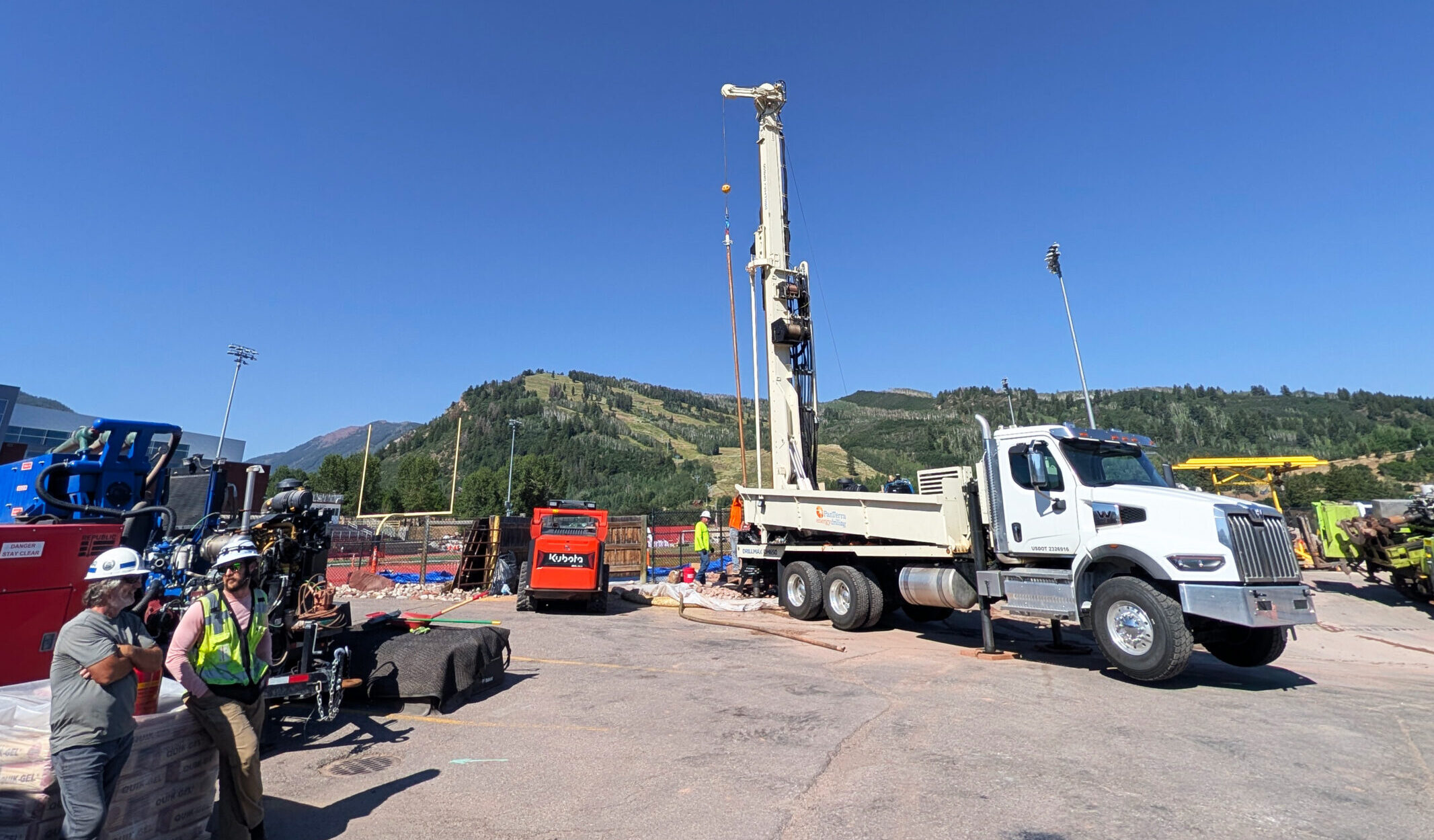
Aspen School District Achieves Historic Geothermal Drilli…
District drills to 1,000 feet, creating one of Colorado’s deepest ground source geothermal bores and advancing a $5 m…

Shayli Volk: Bringing Clarity to Complex Design-Build Work
For Shayli Volk, construction is about understanding how ideas turn into action and making sure nothing gets lost alo…

McKinstry’s Sean Stephens on Safety, Execution and Buildi…
“It can be overwhelming if you try to take it all in at once. Prioritize what the work needs most, coordinate closely…

