
A Common Threads Conversation: Finding Home in Culture, Community and Each Other
In honor of Asian American, Native Hawaiian, and Pacific Islander (AANHPI) Heritage Month, we asked a McKinstry Alliance leader and Alliance member to sit down for a Common Threads conversation, where teammates set out to explore their unique experiences and find connections along the way.
Over a virtual lunch, Cameryn Laborte, project engineer III, mechanical and Unity Alliance Personal & Professional Development lead and Michelle Forbes-Luong, associate instructional designer and member of the Unity, Women’s, and Early Career Alliances, journeyed in conversation through their roles at McKinstry, how culture shapes relationships at work, and reflections on AANHPI Heritage Month. Their exchange has been edited for length.
Michelle: How long have you been with McKinstry and how did you end up here?
Cameryn: I’ve been at McKinstry for almost four years, right after I graduated college. I asked a close friend’s sister — Isabella Wilke, project engineer III, Mechanical and former Unity Alliance chair — what it was like for a woman of color to be in this industry and how she was finding her way through it. And that was the path that put me onto McKinstry as a possible employer.
Michelle: When you asked what it was like to be a woman of color at McKinstry, what did she share?
Cameryn: She brought up the Unity Alliance, which stood out to me because the experience of my peers was that you’d have to be prepared to walk into a room and not see anyone who looks like you and be comfortable with that. And that’s an off-putting thing to hear when you’re about to enter the workplace. How did you get to McKinstry?
Michelle: I’ve been at McKinstry for almost two years now. I started off with the Talent Development team as an instructional design intern, and then I transferred to the sales training team once I came on full time.
Cameryn: What does your typical day look like as an instructional designer?
Michelle: I create a lot of e-learning courses, training animation videos, slide decks and infographics. So, any type of material you’d need for learning and training.
Cameryn: That’s awesome. Especially when you’re new in the workplace, that’s one of the first things you get to see. You play a pivotal part in the beginning of a path at McKinstry.
Michelle: Exactly. What do you do in your role?
Cameryn: I’m also in design, but in a different way. I’m a mechanical project engineer on the Engineering & Design team for New Construction. I do calculations to determine how to set up heating, cooling or ventilation so everyone can be comfortable inside a building, translated into designs we can use to get building permits.
Michelle: Very cool. Are you working on anything particularly fun or interesting at the moment?
Cameryn: I’m working on a spec office in a building McKinstry has done a lot of work on previously. It’s interesting to be on a project where there’s a pre-existing relationship between our construction side, the owner, and everyone else on the external team as soon as you start. Are you working on anything fun?
Michelle: Right now, we’re piloting an AI platform for sellers to roleplay important conversations. It’s a good way to practice the skills they’re learning in class.
Cameryn: That’s so cool! What’s something fun or unexpected you’ve learned about my work?
Michelle: It was cool to see the blueprints when I sat in on one of your meetings for that spec office project and to see the work Engineering is doing. It was also amazing to see you leading that meeting as a woman of color in a male-dominated space.
What have you learned about my work?
Cameryn: When I sat in on the Enterprise Sales & Marketing all-hands monthly meeting, something that stuck with me is how intentional your work is. Whether it’s a proposal y’all are putting together, or it’s the story you’re publishing on McKinstry.com about a project or a certain role within the company, all of it is in service to our partners and our people.
Michelle: Shifting away from work, can you share a bit about your cultural or ethnic background?
Cameryn: I’m part native Hawaiian, Filipino and Chinese. I was born and raised on Oahu in Hawaii. I’ve got my ethnic background, but I’ve also got the local mixing pot of all the cultures on the island. What about you?
Michelle: Ethnically, I’m half Vietnamese, half Chinese. My dad’s side is originally from China, but he grew up in Vietnam, so I really only identify with Vietnamese culture. When my dad immigrated to America, he was adopted by a white couple in his 20s after he finished school. He took his adopted family name (Forbes) and then his original name (Luong) and combined them. That’s why some people think I’m mixed, but I am ethnically 100% Asian.
Cameryn: That’s cool. Thank you for sharing that. Do you think there’s any part of your cultural identity that shapes how you show up at work?
Michelle: In Vietnamese culture, we greet new people as “aunt, uncle, brother or sister” and there’s an immediate feeling of kinship. I think I try to bring that same sense of closeness into the workplace. I’m not the kind of person to go to work and put my head down all the time; I’m also here to make connections.
On top of that, Asian culture is more collectivist , so I feel like that’s why I grew up to value community and collaborative work.
Cameryn: Exactly. We’re also big on sharing both celebrations and struggles. I think that molds how I collaborate at work because I like doing my part, but I also find value in making sure that I check in. How is everyone’s plate? Is our load shared?
Michelle: Yes, exactly. Are there any common misconceptions or assumptions you’ve encountered that you want others to better understand?
Cameryn: I think our cultural values of resilience, high performance and hospitality are all very well known. On the flip side, there’s a misconception around gratitude and buckle-down culture that I think those who share and don’t share our backgrounds should reflect on.
Michelle: Like the model minority myth. Asians are labeled as hard-working, not complainers, good at math, etc. At first glance, those are all positive things, but it’s very damaging because it flattens all of us into the same person, like there’s one Asian experience. And the thing people don’t talk about enough is that it gets used against other communities too. Like, ‘why can’t they be more like them?’ It sets up this comparison that was never fair to begin with.
On a different note, are there aspects of your cultural or ethnic heritage that you feel really connected to or appreciative of?
Cameryn: I was scared to leave Hawaii, but I appreciate how the hospitable kinship inherent in our cultures helped me find myself and my place here in Seattle. Are there any aspects you’re connected to or appreciative of?
Michelle: I love sharing food from my culture and having people try things other than phở and finding similarities in cuisines across different countries. I also appreciate the time I spent around Vietnamese business owners while I was growing up, especially by visiting salons like the one my mom owns. Where at McKinstry do you feel like yourself, like you belong?
Cameryn: I’m most me in my team meetings with my Engineering team. Those are the people I’ve gotten to know the best, and we always go back and forth to make sure everyone has what they need to move forward together. It’s a space where I feel confident and know I’m contributing to the bigger picture. What about you?
Michelle: I’ve made a solid group of friends at McKinstry who are in a similar career stage as me, and it’s great to take a break during lunch to connect with them and also get together outside of work.
Cameryn: I love that. Switching topics a bit: does AANHPI Heritage Month hold any personal meaning for you?
Michelle: During this month, I try to learn more about identities that aren’t as represented in the mainstream and uplift them. Last year, I organized a team lunch at Phnom Penh Noodle House, which is a Cambodian/Khmer restaurant. I didn’t want us to go to a big chain. Instead, I wanted to bring more awareness to cultures we don’t hear a lot about.
Cameryn: That’s beautiful. The ways I’ve engaged with AANHPI Heritage Month have changed over time. Growing up in Hawaii, instead of calling May 1 “May Day,” we call it “Lei Day” to celebrate the lei tradition. I’ve been making leis for a while now and I never saw this as participating in my heritage because it was just a part of my life. Now that I’m in Seattle, I’m more intentional about making leis in May and practicing hula again.
Michelle: I love that. Last question: What excites you about where McKinstry is headed?
Cameryn: The most exciting thing is seeing how McKinstry isn’t static and watching growth happen on a team by team, resource by resource level.
Michelle: I love that McKinstry values the growth of their people. With promotions and professional development opportunities, you’re not going to be stagnant. Since I’m on the learning and development side, I see how much effort we put into our people and help them grow.
Explore Other News
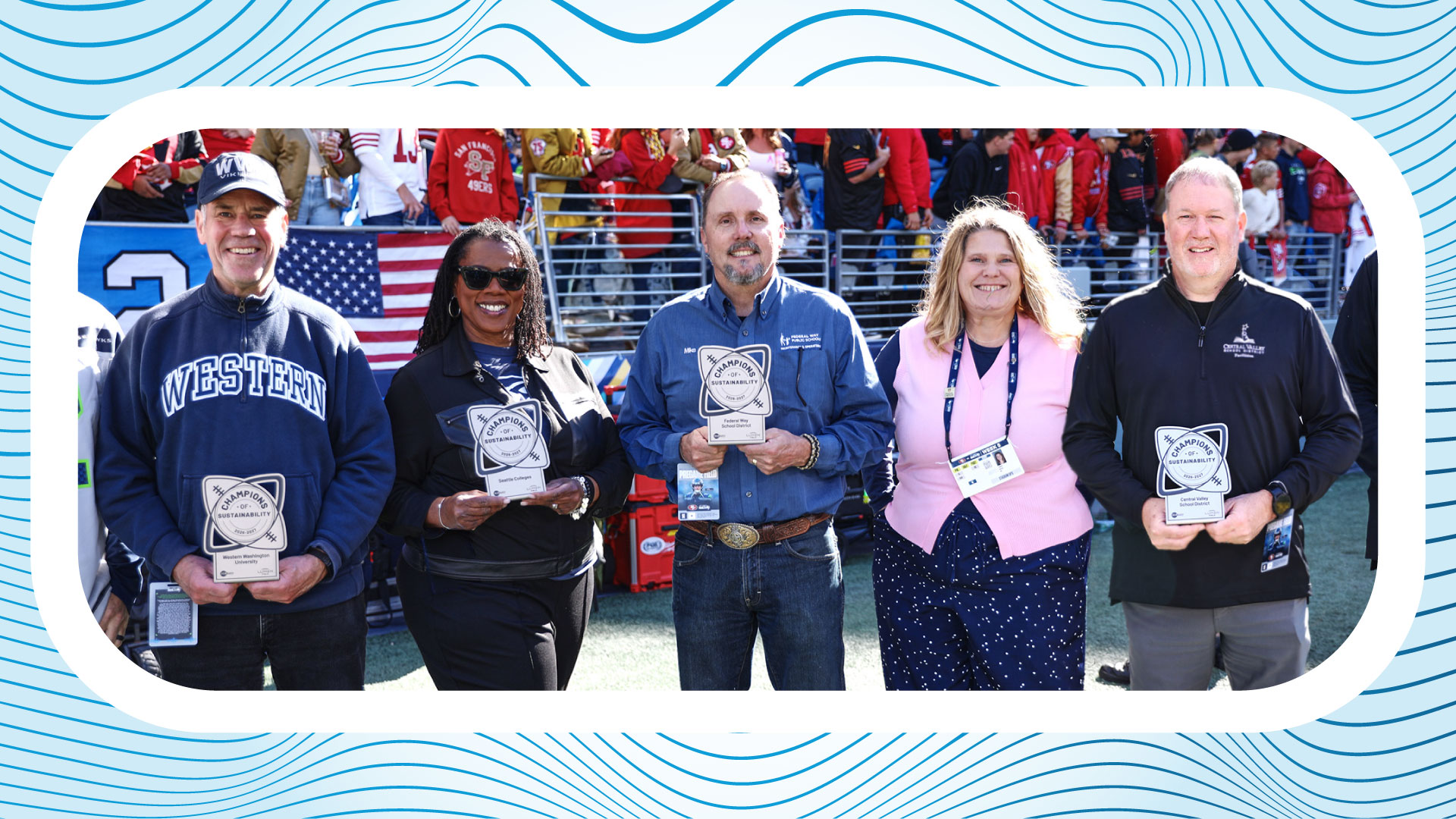
McKinstry and Lumen Field Honor 2026 Zero+ Champions of S…
Central Valley School District, Federal Way Public Schools, Western Washington University and Seattle Colleges recogn…
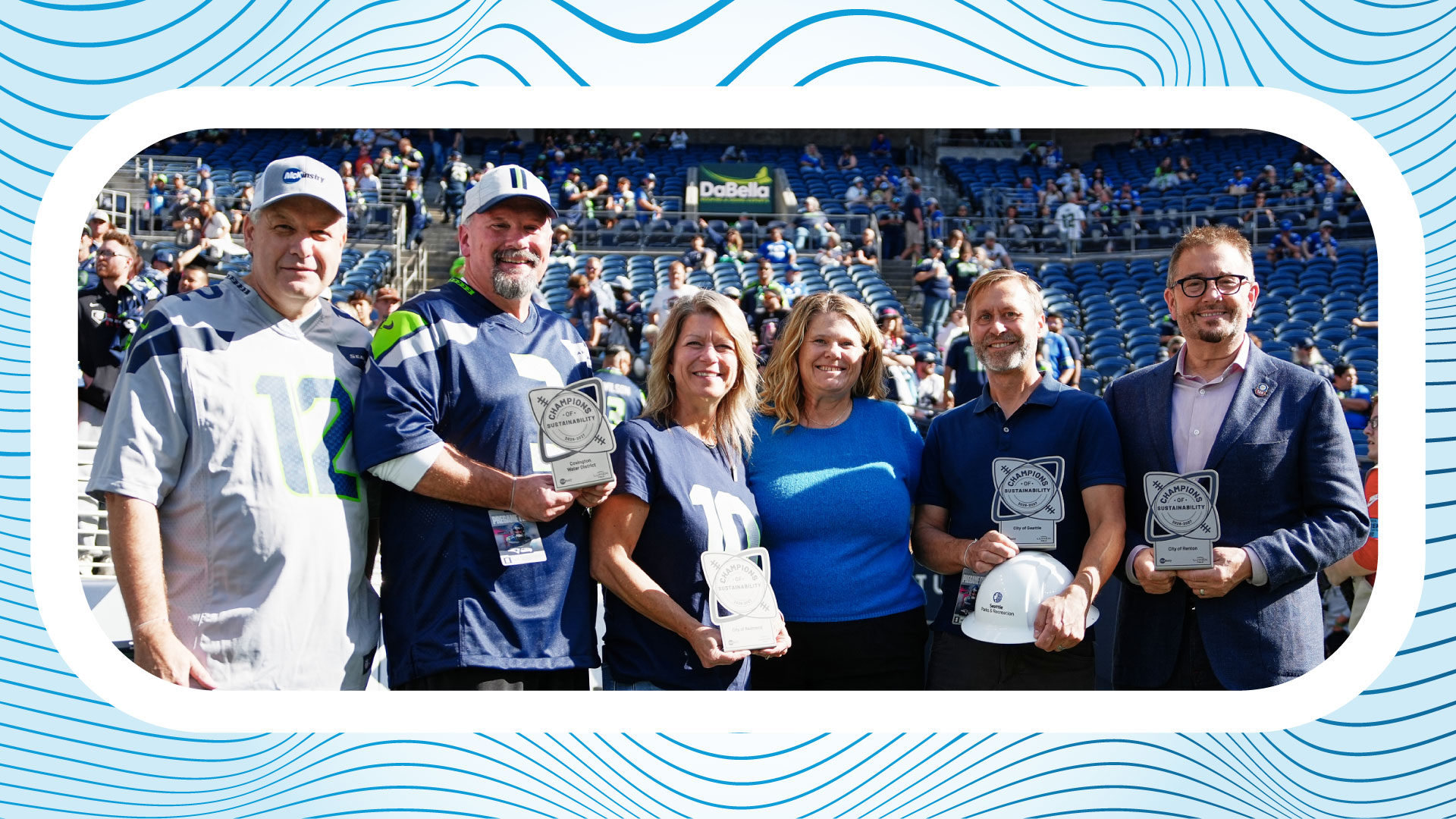
McKinstry and Lumen Field Honor 2026 Zero+ Champions of S…
Covington Water District and the cities of Seattle, Redmond and Renton recognized for advancing sustainability, reduc…
2025 Impact Award Winners Make a Difference
The fifth annual McKinstry Impact Awards honor employees who have made exceptional contributions to environmental and…

