
Western Washington University Recognized as a 2026 Zero+ Champion of Sustainability for Transforming Campus Energy
McKinstry and Lumen Field honor the university for pairing a zero-energy building with a plan to transition to low carbon fueled campus heating
McKinstry and Lumen Field honor the university for pairing a zero-energy building with a plan to transition to low carbon fueled campus heating
McKinstry, in partnership with Lumen Field, launched the Zero+ Champions of Sustainability Awards to recognize organizations making measurable progress in sustainability.
Western Washington University (WWU) was selected as a 2026 winner for turning its commitment to carbon neutrality into action, from a high-performance academic building to a campuswide plan to reduce fossil fuels required for heating by 90%.
The university’s next major challenge is also its most ambitious: replacing the inefficient gas-fired central steam plant that heats much of campus with a low carbon, hot water system powered by heat pumps, rooftop solar and a planned future connection to a Port of Bellingham district energy network.
The effort builds on what WWU has already demonstrated at Kaiser Borsari Hall, a roughly 53,300-square-foot facility that became Washington’s first publicly funded zero-energy academic building on a university campus. Together, the projects illustrate WWU’s approach to decarbonization: prove what is possible in individual buildings, then apply those lessons to the infrastructure that connects an entire campus.
From One Building to an Entire Campus
WWU adopted a Sustainability Action Plan in 2017 with a goal of achieving carbon neutrality by 2035. Since then, the university has increasingly incorporated sustainability into major capital and infrastructure decisions, treating buildings as both long-term investments and teaching tools.
Kaiser Borsari Hall is a flagship example.
The four-story building houses electrical engineering, computer science and the Institute for Energy Studies and was designed as a living laboratory for the technologies and strategies needed to reduce building emissions. Its mass-timber structure stores carbon and reduces embodied emissions by roughly 63% compared with conventional construction, while an all-electric mechanical system eliminates operational carbon.
Rooftop solar covers about three-quarters of the roof, and the building uses roughly 82% less energy than conventional construction. It is also the first major academic building on campus to operate completely independently of the aging central steam plant.
The project has earned national recognition, including a Holcim Foundation sustainability award for North America, but its larger significance is what it represents for the rest of campus.
Tackling the Campus Heating Challenge
While Kaiser Borsari Hall demonstrates what a fossil-free building can achieve, most of WWU’s campus still depends on an aging central steam system. Replacing that infrastructure requires coordinating energy systems across more than 40 buildings while keeping classrooms, laboratories, offices and other facilities operating throughout the transition.
WWU is developing a phased approach to replace the gas-fired steam plant with a medium-temperature hot water (MTHW) distribution system supported by geothermal and heat-pump technology. The strategy is designed to move the university away from fossil-fueled heating while allowing the transition to occur incrementally across the active campus.
A facility condition assessment spanning more than 50 campus buildings now provides the foundation for that long-term roadmap. The assessment helps WWU understand where aging infrastructure, building conditions and energy systems intersect, informing both its decarbonization strategy and compliance with Washington’s Clean Building Performance Standards.
The work turns carbon neutrality from a long-term aspiration into a sequence of infrastructure decisions that can be planned, funded and implemented over time.
Designing Buildings as Teaching Tools
For WWU, the value of these investments extends beyond energy performance.
The university has positioned its campuses as places where students can see sustainability strategies operating in real time and engage with the challenges of designing and operating lower-carbon buildings.
That approach is particularly visible at Kaiser Borsari Hall, where students studying energy, engineering and computer science learn in a building that incorporates many of the technologies they are preparing to design, operate and improve.
The university’s sustainability work therefore serves two purposes: reducing the carbon impact of its own facilities while giving students firsthand experience with the systems and decisions shaping the future of the built environment.
Zero+ Champion of Sustainability
WWU’s work demonstrates the progression from an individual high-performance building to the much more complex task of transforming an entire campus.
With Kaiser Borsari Hall, the university has shown that zero-energy, zero-carbon design can be integrated into a major academic facility. Its campuswide decarbonization roadmap takes the next step by addressing the central energy infrastructure that connects dozens of buildings.
McKinstry and Lumen Field recognize Western Washington University as a 2026 Zero+ Champion of Sustainability for pairing ambitious carbon-neutrality goals with practical infrastructure planning, innovative building design and a commitment to preparing students to solve the decarbonization challenges ahead.

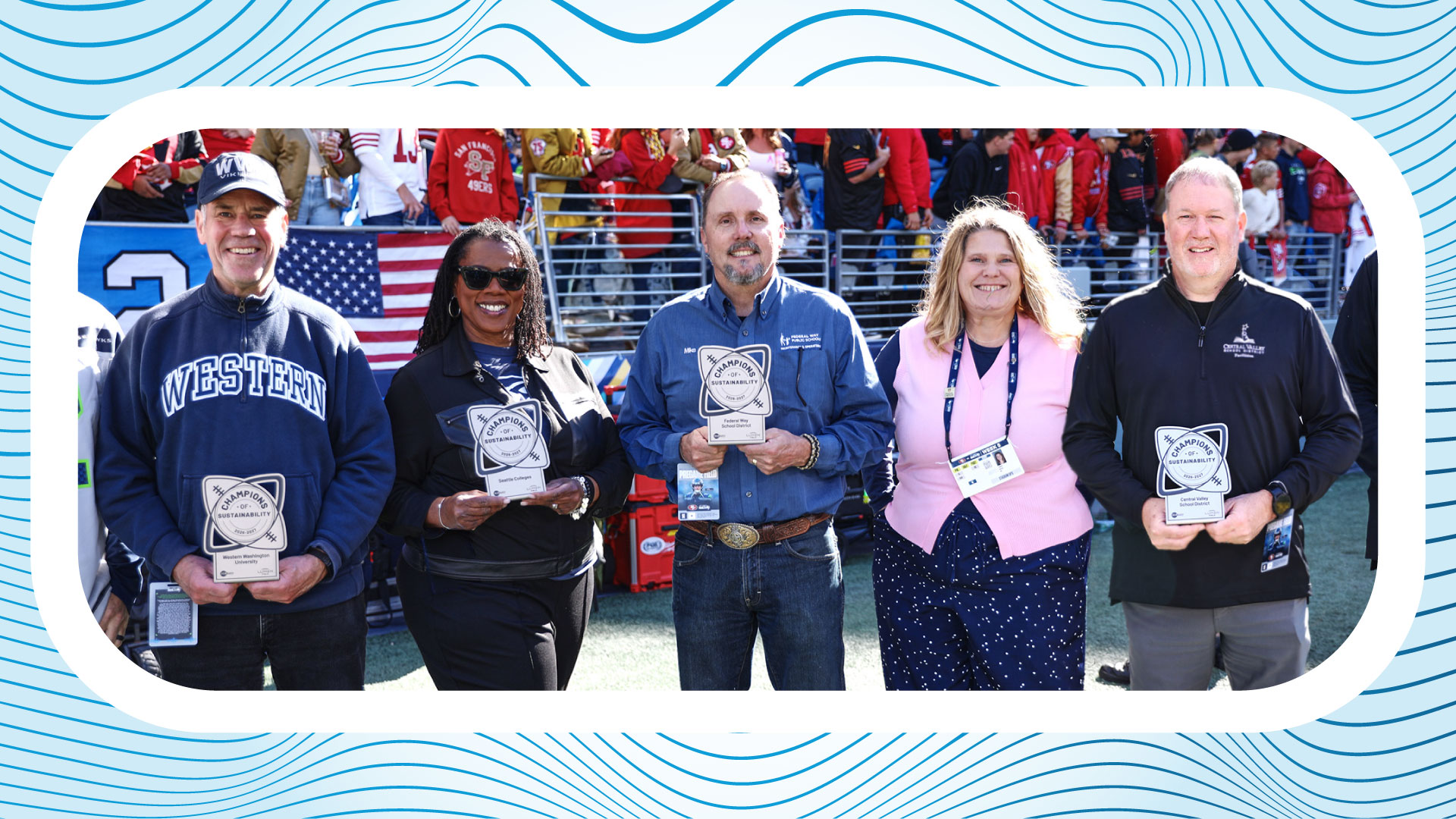
Greg Hough, assistant director of asset management, Western Washington University, accepts the 2026 Zero+ Champion of Sustainability Award on Oct. 11 at Lumen Field.
Explore Other Insights

Western Washington University Recognized as a 2026 Zero+ …
McKinstry and Lumen Field honor the university for pairing a zero-energy building with a plan to transition to low ca…

Federal Way Public Schools Recognized as a Zero+ Champion…
McKinstry and Lumen Field honor district for expanding solar, reducing energy costs and investing savings back into s…
McKinstry and Lumen Field Honor 2026 Zero+ Champions of S…
Central Valley School District, Federal Way Public Schools, Western Washington University and Seattle Colleges recogn…

