
- All Posts
- From Heatwaves to Haboobs: Planning for Weather Risks
From Heatwaves to Haboobs: Planning for Weather Risks
Effective weather planning not only protects workers, but also supports project continuity by helping teams anticipate disruptions and adapt safely when conditions change.
One minute, crews are working under clear skies. The next, a wall of dust sweeps across the horizon in Arizona, reducing visibility and changing site conditions in a matter of moments. In other parts of the country, the same sudden shift might come in the form of a fast-moving hailstorm, high winds, extreme heat, wildfire smoke or an unexpected winter storm.
Weather is one of the few variables no project team can control. At McKinstry, preparing for changing conditions is built into the way teams plan, communicate and work because safety is never left to chance.
Whether teams are adjusting schedules to avoid triple-digit temperatures, monitoring air quality during wildfire season or securing jobsites ahead of severe weather, the goal remains the same: anticipate risks early, adapt when conditions change and ensure everyone goes home safely and unharmed.
Planning from the Start
“Weather doesn’t always have to stop the work,” said Ryan Humphrey, a senior program manager on the McKinstry Environmental Health and Safety team. “Sometimes it changes how or when we safely perform the work. Planning ahead for potential project impacts is key.”
In the best scenarios, Environmental Health and Safety is involved during preconstruction and project planning, before schedules and execution strategies are finalized. By understanding the location, season, scope of work and anticipated hazards, project teams can account for weather-related risks from the start.
That planning looks different depending on the project and region. Summer work may require preparations for heat exposure, hydration, shade and adjusted work hours. Winter projects can introduce challenges such as snow, ice, cold stress and reduced daylight hours. In the Southwest, teams may prepare for extreme heat and dust storms, while Northwest projects often account for wildfire smoke and changing air quality conditions.
Adapting in the Moment
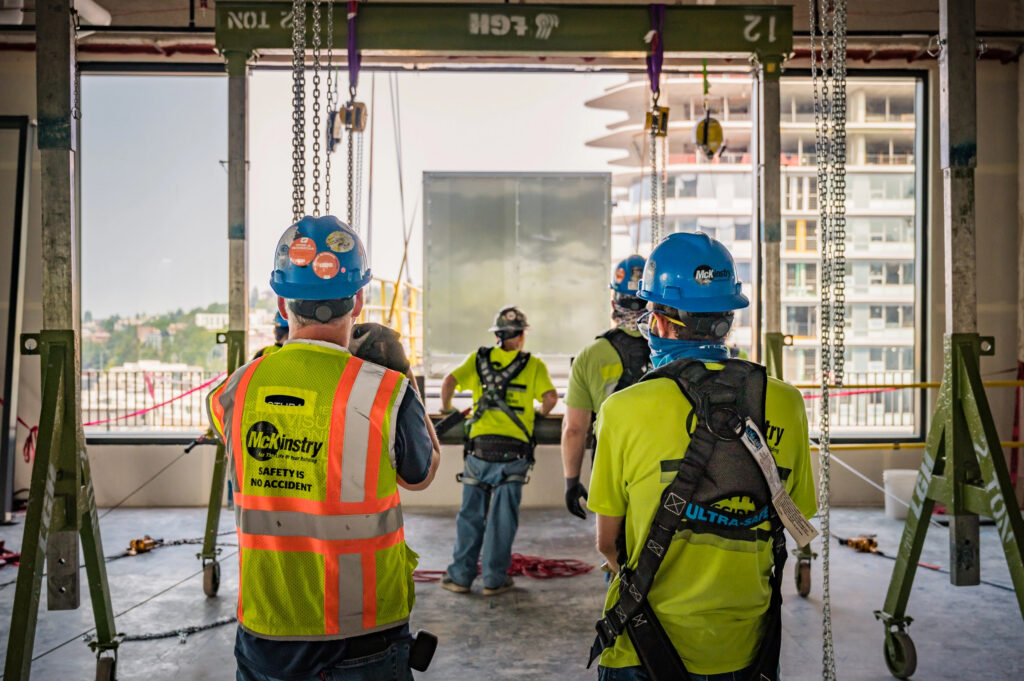
Even the most solid plans cannot predict the weather. That’s why project teams continuously monitor conditions and adjust as conditions change. Weather hazards are regularly discussed in pre-task plans, site walks, toolbox talks and Monday morning meetings to help crews prepare for the day’s conditions.
Sometimes those adjustments are simple. During periods of extreme heat, crews may begin work earlier in the morning or move certain activities to evening hours to reduce exposure. For work where employees are directly exposed to sunlight and heat, these schedule changes can significantly reduce risk.
Other adjustments are driven by forecasted weather.
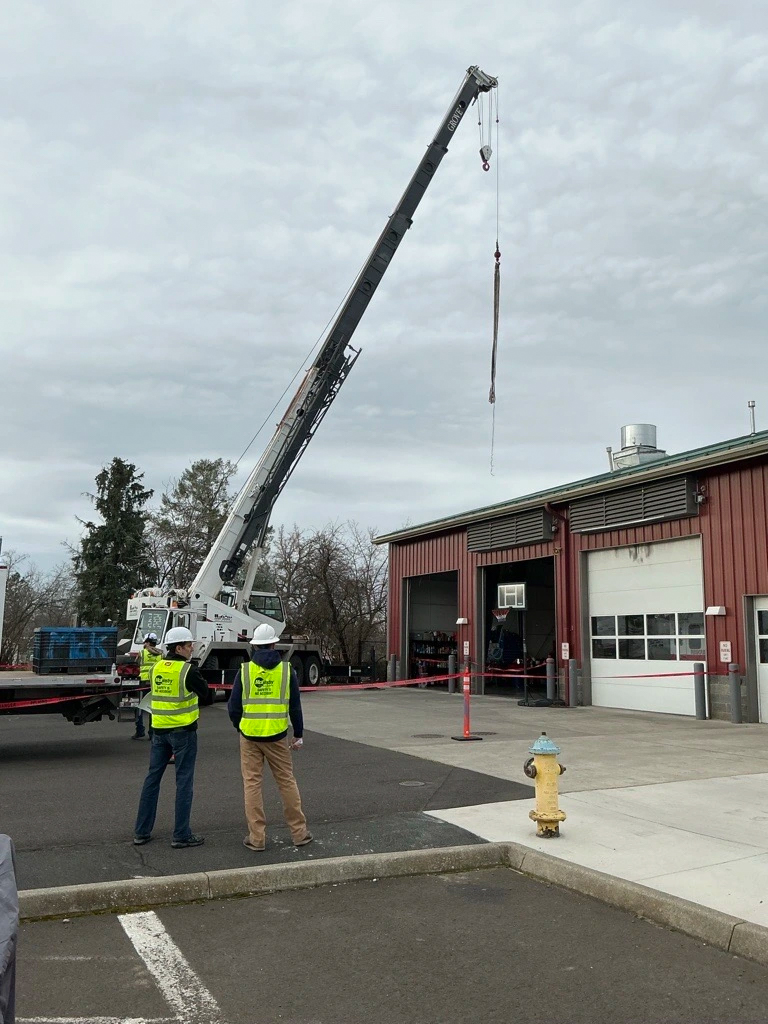
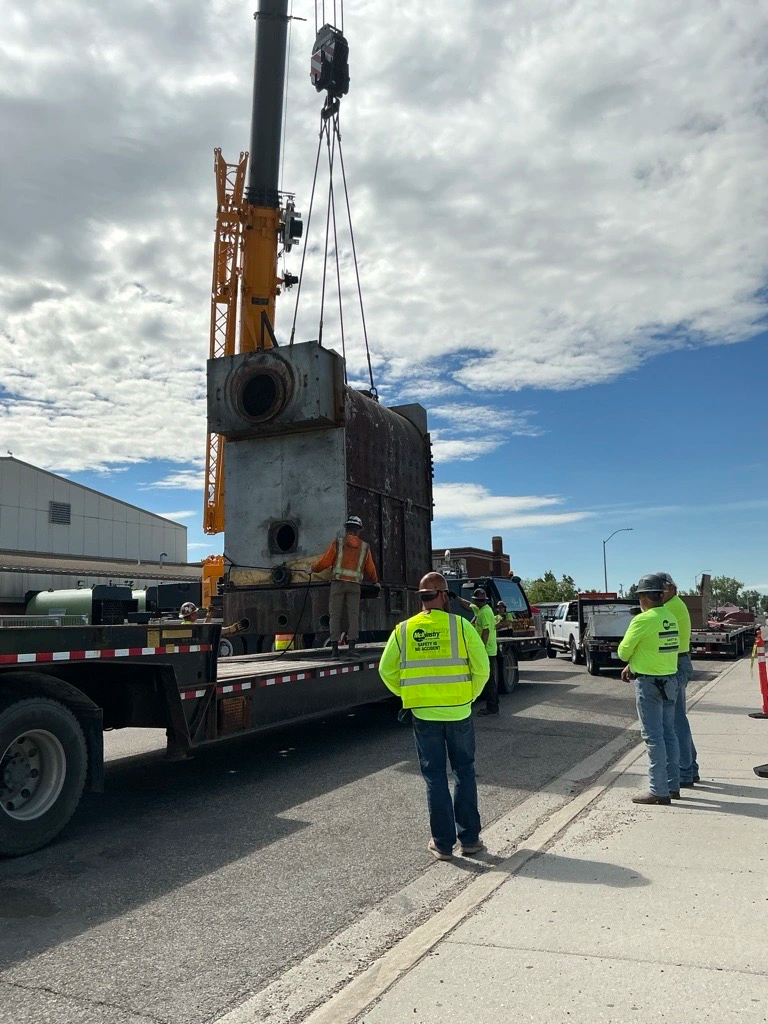
“Crane operations, for example, are highly sensitive to wind conditions,” said Ryan. “Recently, the team moved a crane pick ahead of schedule because high winds were expected the following week. Because the planning was already in place, the team could safely adjust its schedule and avoid the forecasted winds.
One Team, Many Conditions
Because the weather challenges our teams face vary widely across the country, regional leaders, like Cliff Faraci, director of Southwest regional operations for McKinstry, take monthly opportunities to share knowledge.
“It’s about sharing different experiences, and it gives us the opportunity to learn from one another based on each other’s experiences and work practices,” said Cliff.
McKinstry supports that regional approach through broader emergency preparedness and response efforts that strengthen communication, coordination and readiness across the organization.
Safety Powered by People
While plans, procedures and forecasts are important, Ryan believes the most effective weather response starts with people.
“The recent Spokane wildfires demonstrated just how important that human element can be,” said Ryan. “As evacuations expanded across the region, a cross-function team that included McKinstry executive leadership, Environmental Health and Safety, Human Resources, Communications, Social Impact and local leadership worked together to account for employees and support affected families and the broader community. The event highlighted opportunities to continue improving emergency response systems, but it also reinforced the culture of care that drives McKinstry’s safety culture.”
Weather will always create uncertainty. What remains constant is McKinstry’s commitment to planning ahead, responding quickly and putting people first.
Ryan adds, “Our job is to build enough resilience into our planning and our teams that we can adapt safely when that uncertainty becomes reality.”
Whether the challenge is heat, hail, smoke, wind, snow, rain or a haboob rolling across the desert, safety remains at the center of every decision.

They are usually massive, opaque walls of sand and dust that can be miles wide and thousands of feet high with winds going anywhere from 50-70mph.
Arabic term meaning dust storm
Haboobs are often caused by thunderstorm outflow wind when cold, dense air from a collapsing or intense thunderstorm slams onto the ground and rushes outward.
Explore Other Insights
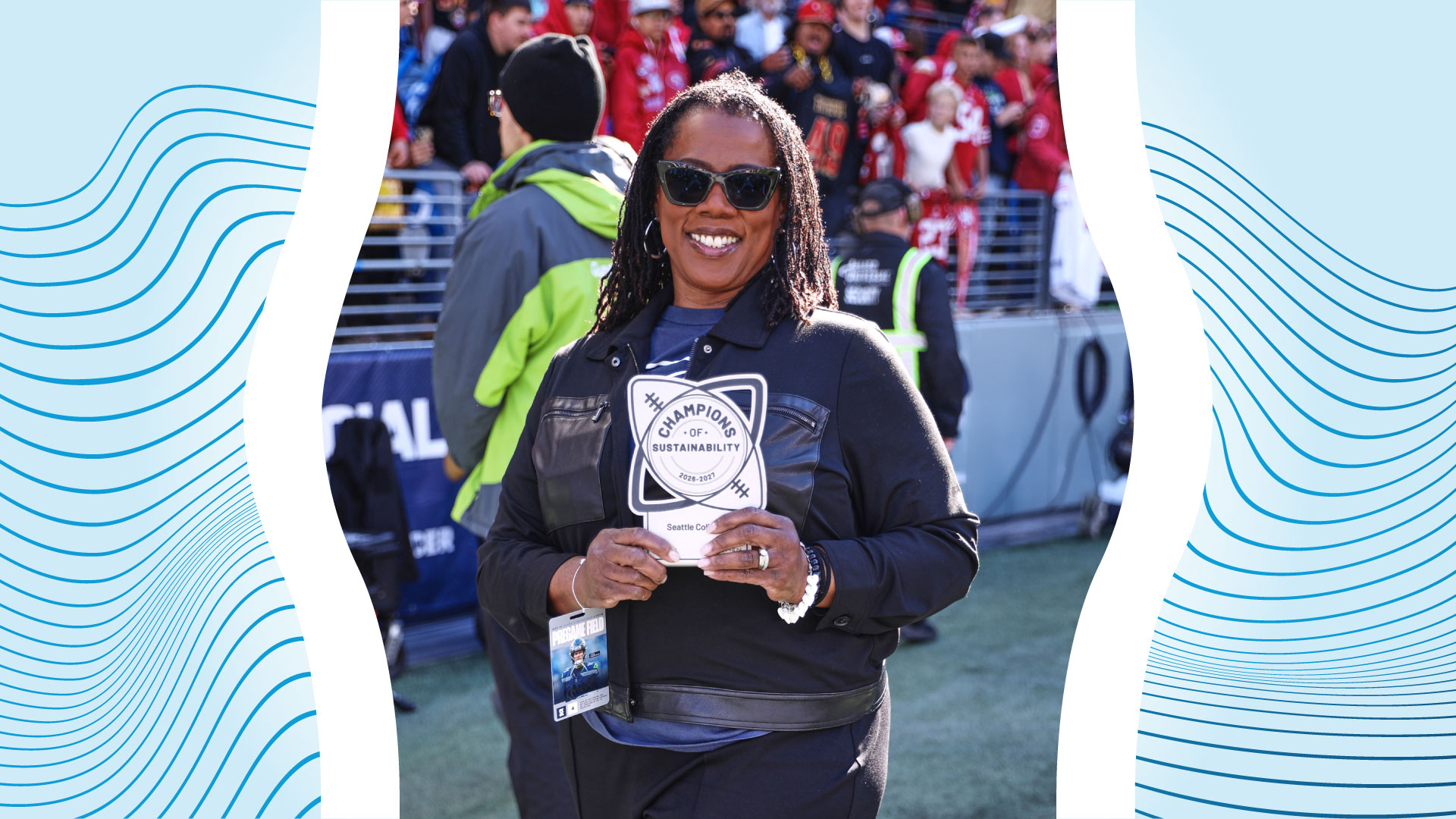
Seattle Colleges Recognized as a Zero+ Champion of Sustai…
McKinstry and Lumen Field honor Seattle Colleges for transforming campus infrastructure into a living laboratory for …
Central Valley School District Recognized as 2026 Zero+ C…
McKinstry and Lumen Field honor Eastern Washington district for modernizing more than 1.1 million square feet of scho…
Western Washington University Recognized as a 2026 Zero+ …
McKinstry and Lumen Field honor the university for pairing a zero-energy building with a plan to transition to low ca…

